AI in Finance: How Artificial Intelligence Is Transforming Banking and Investment
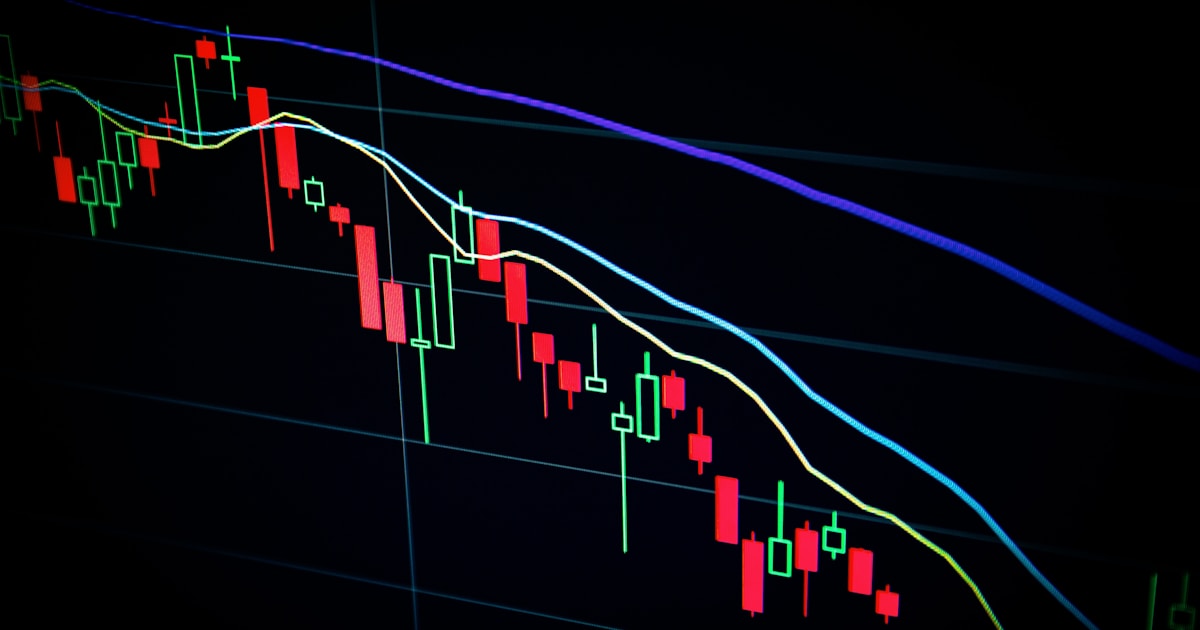
The financial industry is undergoing its most significant transformation in decades. Artificial intelligence is no longer a futuristic concept in banking and investment—it is a present reality reshaping how institutions manage risk, detect fraud, execute trades, and serve customers. From Wall Street trading floors to mobile banking apps, AI in finance has moved from experimental pilot programs to mission-critical infrastructure.
In 2026, global spending on AI in financial services is projected to exceed $45 billion, according to industry estimates. This guide explores how machine learning in finance works, where AI trading delivers measurable results, and why every financial professional needs to understand these technologies.
The Current State of AI in Finance
Financial institutions were among the earliest adopters of artificial intelligence, and for good reason. The industry generates enormous volumes of structured data, operates within clearly defined parameters, and faces intense competitive pressure to improve efficiency. These conditions make finance an ideal environment for AI applications.
Today, AI in business contexts within finance spans three broad categories:
- Process automation: Routine tasks like data entry, document verification, and compliance checks are handled by AI systems with minimal human oversight.
- Advanced analytics: Machine learning models analyze vast datasets to identify patterns, forecast trends, and support investment decisions.
- Decision support: AI provides recommendations for credit approvals, portfolio allocation, and risk management strategies.
Major banks like JPMorgan Chase, Goldman Sachs, and HSBC now employ hundreds of AI specialists. Meanwhile, fintech startups are building AI-first financial products that challenge traditional institutions at every level.
AI Trading: Revolutionizing the Markets
Perhaps no area of finance has been more visibly transformed by AI than trading. Algorithmic trading now accounts for an estimated 60–75% of all equity trading volume in the United States. Within that space, AI-driven strategies are rapidly gaining ground on traditional rule-based algorithms.
How AI Trading Works
AI trading systems use machine learning to analyze market data, news sentiment, social media trends, and economic indicators simultaneously. Unlike rule-based algorithms that follow fixed instructions, these systems learn from outcomes and continuously refine their strategies.
The key advantages of AI trading include:
- Speed: AI models can process market data and execute trades in microseconds, capturing opportunities invisible to human traders.
- Pattern recognition: Deep learning algorithms identify complex correlations across thousands of variables that traditional analysis would miss.
- Adaptability: Reinforcement learning allows trading systems to adjust strategies in response to changing market conditions without manual reprogramming.
- Emotion-free execution: AI eliminates the psychological biases—fear, greed, overconfidence—that lead human traders to make poor decisions.
Quantitative hedge funds like Renaissance Technologies, Two Sigma, and DE Shaw have long relied on computational approaches. The new wave of AI-powered firms is pushing these capabilities further, using natural language processing to interpret earnings calls, satellite imagery to track retail foot traffic, and alternative data sources to generate alpha.
Real-World Impact of AI on Trading Performance
The results speak for themselves. AI-powered trading strategies have consistently outperformed traditional quantitative models in backtesting and live trading environments. Firms employing deep learning for portfolio optimization report 15–25% improvement in risk-adjusted returns compared to conventional methods.
However, AI trading is not without controversy. Flash crashes attributed to algorithmic systems have raised concerns about market stability. Regulators are increasingly scrutinizing the role of AI in financial markets, and the industry must balance innovation with systemic risk management.
Machine Learning in Finance: Key Applications
Beyond trading, machine learning in finance has found transformative applications across the industry.
Credit Scoring and Lending
Traditional credit scoring relies on limited variables—payment history, credit utilization, length of credit history. AI models can incorporate thousands of alternative data points, including utility payments, rental history, and even behavioral signals from digital activity. This expanded view enables more accurate risk assessment and opens lending to individuals underserved by conventional systems.
Companies like Upstart and LendingClub use machine learning models that consider education, employment history, and other factors to make lending decisions. Their models report 27% fewer defaults at the same approval rate compared to traditional FICO-based scoring.
Fraud Detection
Fraud costs the financial industry tens of billions of dollars annually. AI-based fraud detection systems analyze transaction patterns in real-time, flagging suspicious activity before losses occur.
Machine learning models excel at fraud detection because they can identify subtle anomalies across millions of transactions. Banks report that AI-powered fraud detection reduces false positives by 50% while catching 60% more fraudulent transactions than rule-based systems.
Modern fraud detection systems use a combination of supervised learning (trained on known fraud cases) and unsupervised learning (identifying novel patterns). This hybrid approach adapts to evolving fraud tactics faster than any static rule set.
Customer Service and Personalization
AI-powered chatbots and virtual assistants now handle a significant portion of customer inquiries at major banks. Bank of America’s virtual assistant Erica has handled over 1.5 billion interactions since its launch, helping customers with everything from balance checks to financial planning advice.
Beyond basic queries, AI enables hyper-personalized financial advice. Robo-advisors like Betterment and Wealthfront use machine learning to create customized investment portfolios based on individual goals, risk tolerance, and tax situations—at a fraction of the cost of traditional financial advisors.
Risk Management and Compliance
Financial institutions face complex regulatory requirements across multiple jurisdictions. AI systems automate compliance monitoring, flag potential violations, and generate required reports. This reduces the burden on compliance teams while improving accuracy.
In risk management, AI models stress-test portfolios against thousands of scenarios, providing more comprehensive risk assessments than traditional Value-at-Risk models. Machine learning also improves market risk forecasting by incorporating non-linear relationships and tail-risk events that conventional models underestimate.
Challenges and Ethical Considerations
Despite its promise, AI in finance raises significant challenges that the industry must address.
Algorithmic Bias
AI models trained on historical data can perpetuate and amplify existing biases. In lending, this means AI systems could systematically disadvantage certain demographic groups even when protected characteristics are excluded from the model. Financial institutions must actively audit their AI systems for bias and implement fairness constraints.
Explainability and Transparency
Many AI models, particularly deep learning systems, operate as “black boxes.” When a model denies a loan application or triggers a trading loss, it can be difficult or impossible to explain precisely why. Regulators are increasingly demanding explainable AI in financial services, pushing firms to develop models that balance predictive power with interpretability.
Data Privacy and Security
AI systems require vast amounts of data, including sensitive financial and personal information. Financial institutions must navigate complex data privacy regulations while ensuring their AI infrastructure is resilient against adversarial attacks. The concentration of AI capabilities in large tech companies also raises questions about data sovereignty and competitive fairness.
The Future of AI in Finance
Looking ahead, several trends will shape the role of AI in financial services:
- Generative AI for financial analysis: Large language models are beginning to automate research report generation, earnings analysis, and financial planning conversations.
- Embedded finance: AI will power seamless financial services integrated into non-financial platforms, from e-commerce checkout to healthcare billing.
- Central bank digital currencies: As governments explore digital currencies, AI will play a critical role in monetary policy implementation and financial monitoring.
- Democratized investing: AI tools that were once exclusive to institutional investors will become accessible to retail investors, leveling the playing field.
The financial institutions that thrive in the coming decade will be those that successfully integrate AI into their operations while managing its risks responsibly. For finance professionals, developing AI literacy is no longer optional—it is essential for career relevance.
Frequently Asked Questions
How is AI used in finance today?
AI is used across finance for algorithmic trading, fraud detection, credit scoring, customer service chatbots, risk management, robo-advisory, and document processing. Major banks and fintech firms deploy machine learning models to automate decisions and detect patterns humans cannot.
What are the risks of AI in finance?
Key risks include algorithmic bias in lending decisions, model opacity making it hard to explain outcomes, overfitting to historical data, cybersecurity vulnerabilities, and potential market instability from flash crashes caused by automated trading systems.
Will AI replace financial analysts?
AI is unlikely to fully replace financial analysts but will transform their roles. Analysts will increasingly work alongside AI tools, focusing on strategic thinking, relationship management, and interpreting AI-generated insights rather than routine data analysis.
What is algorithmic trading and how does AI improve it?
Algorithmic trading uses computer programs to execute trades based on predefined rules. AI enhances this by learning from market data in real-time, adapting strategies to changing conditions, identifying complex patterns, and optimizing execution speed far beyond human capability.
How does AI help with fraud detection in banking?
AI analyzes millions of transactions in real-time, identifying anomalies and suspicious patterns. Machine learning models learn from historical fraud cases and adapt to new tactics, reducing false positives and catching sophisticated fraud schemes that rule-based systems miss.